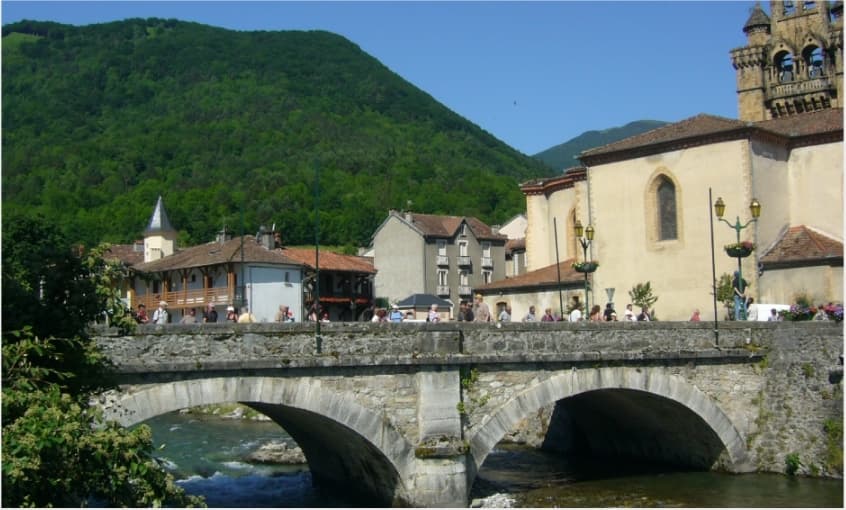
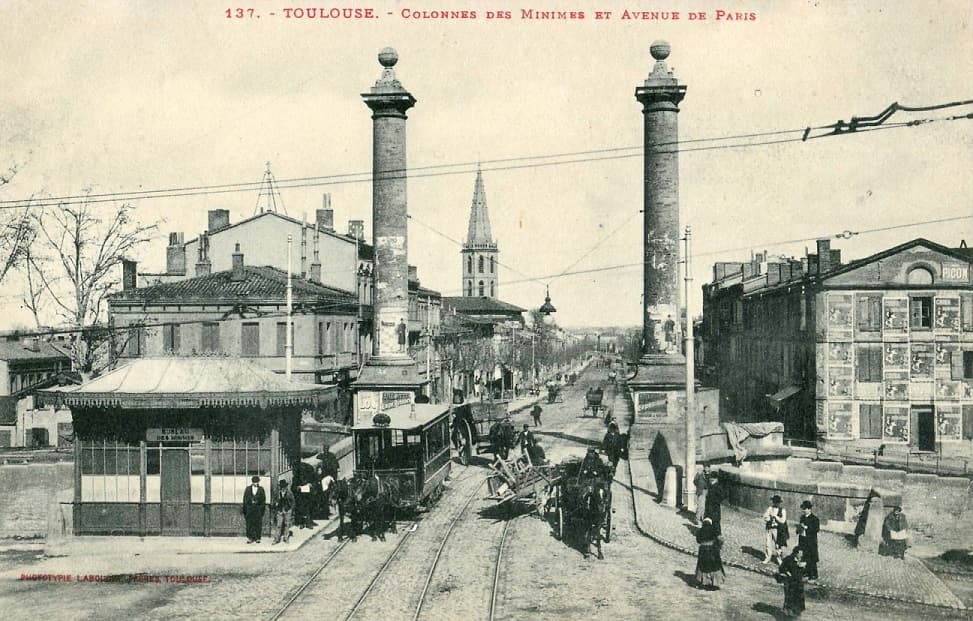
Raymond Abellio was born in 1907, under the name Georges Soulès, in Toulouse in the Minimes district, into a poor family of Pyrenean origin. The Ariège village of Seix, birthplace of his mother's family, would play an important role in Georges Soulès's childhood and early youth.
An introverted child of fragile health, precocious and studious, brilliant in class, he was noticed by his teachers and continued his secondary studies on a scholarship, leading him to prepare for the École Polytechnique entrance exam, which he passed in 1927. This scientific training, especially in mathematics, instilled in him a demand for rigour and precision that would later characterise his approach to philosophy and so-called esoteric traditions.
During his years at Polytechnique, Georges Soulès was torn between his Catholic religious heritage — which manifested in him as a mystical aspiration — and the awakening of a revolutionary political consciousness, which flourished during his years as a young engineer with the Ponts et Chaussées. He then militated on the left wing of the Socialist Party of the 1930s, developing a talent as an orator and deepening a Marxist formation that he would later recognise (once he had moved beyond it) as a kind of science of the social world. In 1936 he was appointed by Léon Blum's government as a mission officer for major public works.
Mobilised from the start of the 1939-1945 war, he was taken prisoner, which led him to reflect on the European geopolitical situation created by Hitler's Germany's victory and its troubled game with Stalin's USSR. Released in early 1941, he was drawn to political action aimed at escaping the dialectic of the powers of the time, which would lead to accusations of collaboration at the Liberation in 1944-45.
His life changed in 1943 when he met Pierre de Combas, an esotericist, who made him aware of the vanity of political action and triggered a radical reassessment of himself in Georges Soulès. He abandoned all political action to devote himself to knowledge: guided by de Combas, he immersed himself in the study of traditions, while also exploring a more classical philosophy, notably Husserl's phenomenology, which played a pre-eminent role in his thought and life. His demand for synthesis and rigour applied to these works, which might have led him to muddled syncretism, but instead guided him towards an original unifying vision of the diverse worlds of spirit, faith, religion, intuition and rationality. In his view, this vision translates into a gnosis that must be both an intellectual approach and a lived transcendence.
Forced to live underground and then to go into exile in Switzerland, Georges Soulès laid the foundations of his philosophical approach while writing his first novel, Heureux les pacifiques, published under the pen name he chose: Raymond Abellio. Cleared by a court of collaboration charges, thanks to testimonies from members of the Resistance, he returned to France in 1953 and thereafter divided his life between writing and his profession as a consulting engineer.
Raymond Abellio published his key philosophical work, La Structure absolue (Éditions Gallimard), in 1965, and developed his oeuvre in novels, essays and a play until his death in 1986.
Abellio's grave is in the Auteuil cemetery in Paris.